

Enquiry Now
What is an E-Way Bill?
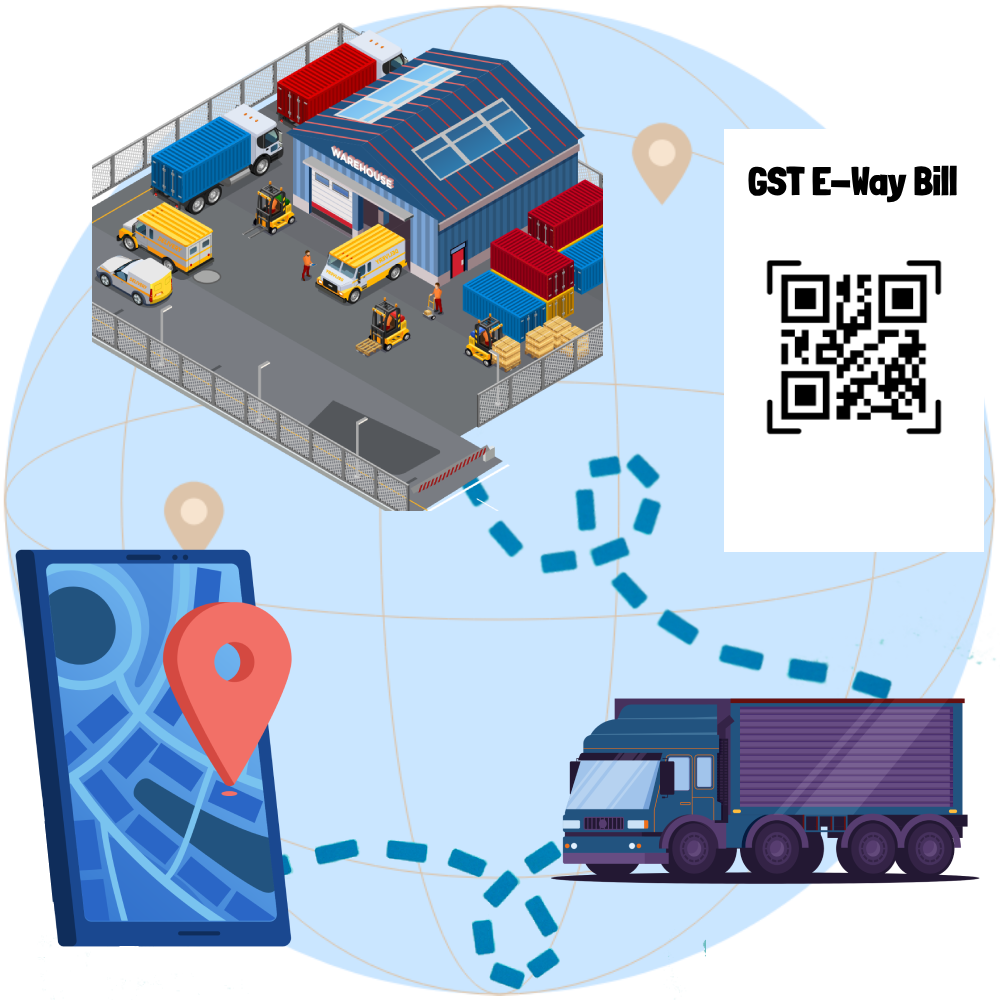
The E-Way Bill (Electronic Way Bill) is a mandatory document introduced under the GST regime to ensure smooth movement of goods across state and national boundaries. It is required for the transportation of goods valued over ₹50,000, whether through road, rail, air, or sea. The E-Way Bill contains essential details like the consignor, consignee, goods description, transporter details, and vehicle number.
Its purpose is to track the movement of goods, curb tax evasion, and promote transparency in supply chain logistics. Without an E-Way Bill, goods may be seized, and penalties imposed. It's an essential compliance mechanism for both registered and unregistered businesses engaging in trade.
Who Needs an E-Way Bill?
For Businesses and Transporters
- Registered persons transporting goods valued above ₹50,000.
- Unregistered persons supplying goods to registered buyers.
- Transporters moving goods on behalf of others.
- E-commerce operators or courier agencies transporting goods.
- For inter-state and some intra-state movements, as per state rules.
Why Generate E-Way Bill?
Compliance and Operational Efficiency
Regulatory Compliance
The E-Way Bill ensures that your business follows GST norms during the transportation of goods. It helps avoid complications at checkpoints and satisfies tax authority requirements.
Prevents Penalties
Generating an E-Way Bill protects you from hefty fines and the risk of your goods or vehicle being seized during transit due to non-compliance.
Faster Transit
With valid E-Way Bills, vehicles are less likely to face delays at check posts, making logistics smoother and reducing overall delivery time.
Transparency
The system tracks the movement of goods in real time, ensuring transparency in supply chain transactions and reducing fraud or evasion attempts.
Boosts Business Reputation
Compliance with GST norms through timely E-Way Bill generation builds trust with clients, vendors, and government bodies, enhancing your brand's credibility.
Reduces Paperwork
The online E-Way Bill system simplifies documentation by reducing the need for physical permits, invoices, and manual approvals.
Documents Required
Essential Documents for E-Way Bill
- Invoice or bill of supply of goods
- Transporter ID or vehicle number
- GSTIN of supplier and recipient
- HSN code of goods
- Quantity and value of goods
- Delivery address and PIN code
Reason for choosing us
Brighht India offers strategic planning, marketing assistance, and professional services—all tailored to your specific needs in one streamlined platform.
Tailored Advice and
Support
Flexible, Client-Centered
Approach

experience
15+
of Experience